Jaw surgery
Corrective jaw surgery repositions the upper jaw, lower jaw, or chin. The goal is a better bite, clearer breathing or speech, and a more balanced face — planned with your orthodontist.
Overview
This is also called orthognathic surgery. It is for skeletal problems braces cannot finish on their own — an underbite, an open bite, a jaw that grew unevenly, or an airway that is crowded because of jaw position.
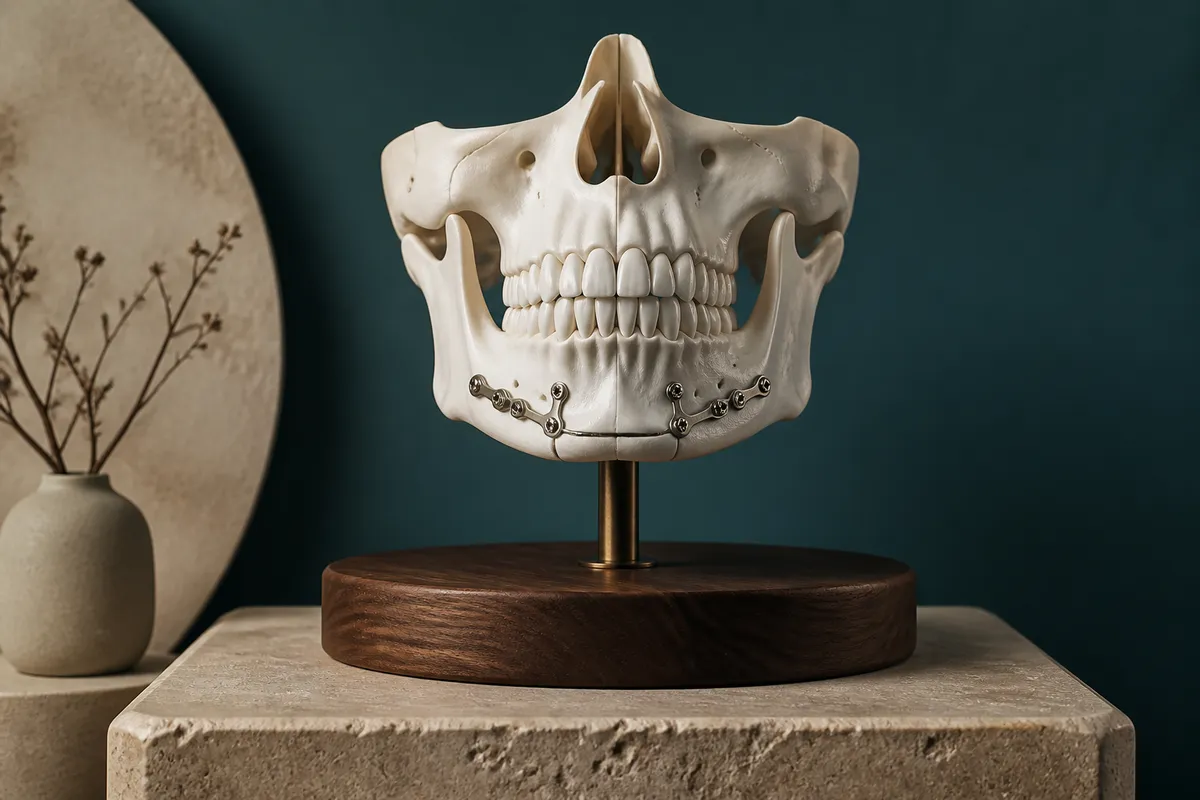
The bones are usually held with small plates and screws. Jaws are not routinely wired shut for weeks the way older stories describe. It is major surgery. It is planned with imaging, time, and an orthodontist. It is not a weekend cosmetic procedure.
Dr. Chad Curtis is an oral and maxillofacial surgeon. That training includes the jaws and operating-room care. We discuss surgery only when it fits. We will not invent case counts, and we will not push this when braces, restorative dentistry, or implants would solve the actual problem.
Who it is for
People who may need this evaluation include older teens and adults with a bite that braces cannot finish, difficulty chewing that is skeletal rather than dental, or sleep-related concerns that should be evaluated with the physicians who manage that diagnosis.
- An underbite or open bite that persists after orthodontic treatment
- A jaw discrepancy your orthodontist wants a surgical opinion on
- Difficulty chewing that is not explained by missing teeth alone
- A second look at a plan you were given elsewhere
If your goal is a single missing tooth, start with implants. If your goal is wisdom teeth, start on that page. A biopsy or cyst in the jaw is a different conversation — see oral pathology.
What to expect
An evaluation includes an exam, photographs, and imaging. If surgery is on the table, planning with your orthodontist comes next. Teeth usually need to be aligned in the jaws for many months before an operating-room date, then finished after the bones move.
Surgery is done under general anesthesia, typically in a hospital. Many patients go home the same day or after one night. The office’s location on the Good Samaritan Medical Center campus is relevant when a case belongs in a hospital rather than the chair in Suite 5200.
If your case is better treated by a colleague who does this work every week, you will hear that recommendation with a name attached.
Recovery
The first weeks bring facial swelling, bruising, and a non-chew or very soft diet. Many people return to school or desk work around two to three weeks. Soft or solid food is often delayed until the surgeon and orthodontist agree the bones can take it.
Numbness of the lips, chin, or palate can last weeks to months. That risk is discussed before you agree.
What patients have said
Two comments from the practice record, shown with first name and last initial.
“Let's face it, no one wants to undergo oral surgery, but if you find yourself in that situation, these are the people you want by your side.”
“By far the most friendly attentive medical facility I have ever experienced.”
Questions patients ask
Do you perform a high volume of jaw surgeries?
Is this cosmetic surgery?
Will my jaws be wired shut?
Will this be done in the office?
Should I start here or with an orthodontist?
Related care
- Full-arch implantsA fixed full arch of teeth supported by four or more implants, sometimes with temporary teeth soon after surgery when you are a candidate.
- Tooth extractionSimple and surgical removal of damaged or hopeless teeth, including broken roots and teeth under the gum.
- Oral pathologyEvaluation and biopsy of sores, patches, lumps, or cysts in the mouth and jaws when something needs a clear diagnosis.
- Office in West Palm Beach1411 N Flagler Dr Ste 5200
West Palm Beach, FL 33401