Dental implants
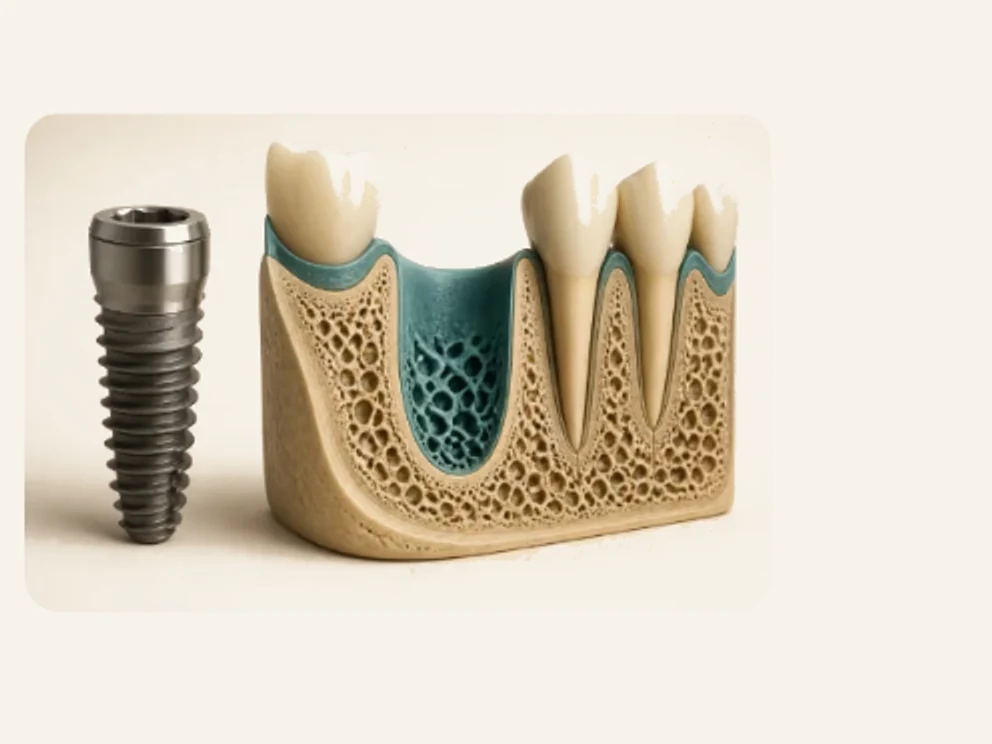
A dental implant is a small post that is placed in the jawbone to replace the root of a missing tooth. For the 3–4 months after implant placement, your bone will grow into the surface of the implant, which is called osseointegration. After the implant is determined to be stable, a small connector (the abutment) is attached above the gums, and your restorative dentist makes the tooth you actually see. At Palm Beach Oral & Maxillofacial Surgery, you will review your implant plan in detail with Dr. Chad Curtis before making your final decision.
Overview
Why many people choose an implant over a bridge
- Neighboring teeth stay intact — a bridge usually requires grinding them down
- The implant helps keep bone in that spot
- You clean it like a regular tooth
- Chewing feels more stable than a removable partial
- The result can look like a natural tooth
A bridge can still be the better choice in some mouths. We will say so.
Dr. Chad M. Curtis trained at Columbia University, where he focused on bone grafting and rebuilding the jaw with growth factors and stem-cell research for implant sites. His oral and maxillofacial surgery training was at the University of Cincinnati.
Who it is for
Implants are for adults missing one tooth, several teeth, or who want more stability than a loose denture. You will need a dentist to restore the implant, or we can coordinate with one.
- A single tooth lost to a crack or a failed root canal
- A space that has been empty long enough for the bone to shrink
- A denture that rocks when you speak or eat
- A treatment plan from another office that you want reviewed
Gum disease, uncontrolled diabetes, heavy smoking, and a thin ridge can change the plan. Some sites need bone grafting first. If the upper jaw has very little remaining bone, zygomatic, pterygoid, or transnasal implants may be discussed instead of a large graft. Some extractions can receive an implant the same day. That is a judgment call, not a promise.
What to expect
Consultation includes an examination and review of imaging. If you are a good candidate for a dental implant, the surgical plan is closely coordinated with your restorative dentist so that the implant emerges in the correct location in the mouth.
Placement is done in the office, often under IV sedation. A small opening is made, the implant is placed, and a cap is put on the top. This area then heals for 3 to 4 months, after which Dr. Curtis will check the implant for stability. Following clearance by Dr. Curtis, you can get your crown made by your dentist.
Recovery
Most people are less sore than they expect, especially compared with a difficult extraction. Soft foods and gentle cleaning around the site are usually enough. Swelling is more noticeable if several implants or a graft were done together.
What patients have said
Two comments from the practice record, shown with first name and last initial.
“Let's face it, no one wants to undergo oral surgery, but if you find yourself in that situation, these are the people you want by your side.”
“By far the most friendly attentive medical facility I have ever experienced.”
Questions patients ask
Do you offer a free second opinion on implants?
How long until I have a finished crown?
What are the parts of a dental implant?
Are implants better than a bridge?
Who makes the crown?
Related care
- Full-arch implantsA fixed full arch of teeth supported by four or more implants, sometimes with temporary teeth soon after surgery when you are a candidate.
- Zygomatic, pterygoid, and transnasal implantsLonger implants that use the cheekbone, pterygoid plate, or the lateral nasal wall when the upper jaw has little remaining bone.
- Bone graftingRebuilds jawbone when you need more bone for an implant or to repair a defect.
- Office in West Palm Beach1411 N Flagler Dr Ste 5200
West Palm Beach, FL 33401