Impacted canine exposure and bonding
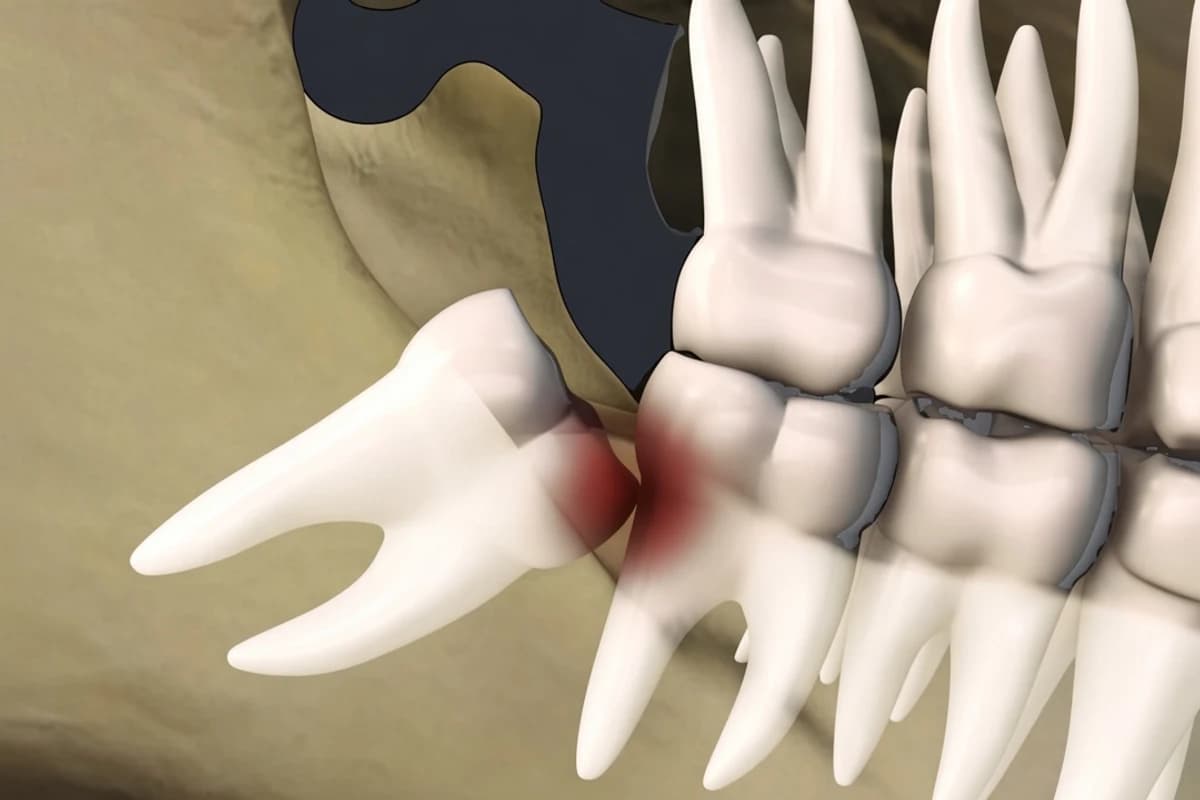
An impacted canine never came into the arch. Exposure uncovers the tooth so the orthodontist can attach a bracket and guide it into place.
Overview
Upper canines are the teeth most often stuck in the palate or on the cheek side of the roots. The orthodontist usually makes space with braces first. Surgery then uncovers the crown and bonds a small bracket and chain so the orthodontist can pull the tooth, slowly, into the arch.
Dr. Chad Curtis does the surgical half. The orthodontist moves the tooth. The plan only works if both offices agree on where the tooth is and which direction it should travel.
Referring orthodontists can send films and a note through the for doctors page. Patients can also request a consult if a canine is missing from the smile and no one has explained why.
Who it is for
- A teen or adult whose canine is still unerupted on a panoramic film or a scan
- The baby canine is still in place and the adult tooth is not coming in
- The orthodontist has asked for exposure and bonding, or for an opinion before braces start
If the canine is fused to the bone, pointed into an adjacent root, or sitting where it cannot be moved safely, the plan may be removal instead of exposure. That is said out loud before surgery.
What to expect
Bring the orthodontist’s films and any note about which tooth and which direction. Dr. Curtis examines you and reviews imaging. A cone-beam scan is ordered when the plain film does not show the tooth’s position clearly enough.
On surgery day the area is numbed. IV sedation is available if you do not want to be aware of the procedure. The gum is opened or a window is made, the crown is uncovered, and a bracket is bonded. The chain is left where the orthodontist can reach it.
You return to the orthodontist on the schedule they set, often within a short time, so the tooth starts to move while the site is still easy to manage.
Recovery
The first days
- Day of surgery: the site is sore once the numbness fades. Gauze is used if there is bleeding. Rest.
- Days 1–3: mild swelling of the gum or cheek is common, more so if the tooth was on the cheek side. Soft food, no straws.
- First week: brush the other teeth. Avoid picking at the chain. Stitches, if used, often loosen within about a week.
After the first week
The surgical soreness usually settles before the orthodontic movement is finished. Moving the tooth takes months and is the orthodontist’s work. Call the surgeon if the chain comes loose, the bracket is gone, or the gum looks like it has grown back over the tooth.
Call us if
- Bleeding does not slow
- Pain or swelling is worse after day three
- The bonded chain or bracket is no longer attached
- You cannot tell whether the tooth is still exposed
There is no separate canine sheet. Gauze, diet, and rinsing follow extraction aftercare unless Dr. Curtis gives you a different note. Download the extraction PDF.
Read the aftercare instructions
Cost and insurance
Exposure and bonding is its own procedure. The estimate changes if both sides are done, if sedation is used, if a scan is needed, and if a baby tooth is removed at the same time. Braces are billed by the orthodontist, not by this office.
What changes the fee is the work itself: whether grafting is needed, which anesthesia is used, the type of restoration your dentist will make, and whether new imaging is required. Dr. Curtis gives an estimate at the consultation, after the exam. This website does not list prices.
The office takes most PPO dental plans. The current in-network list is on patient info. Call (561) 833-6880 if you want to ask about a plan before you come in.
What patients have said
Comments from the practice record, shown with first name and last initial.
“Let's face it, no one wants to undergo oral surgery, but if you find yourself in that situation, these are the people you want by your side.”
“By far the most friendly attentive medical facility I have ever experienced.”
Questions patients ask
Do you place the braces?
What if I do not have an orthodontist yet?
Can the tooth come in on its own?
Is the surgery in the roof of the mouth or the cheek?
Will I be asleep?
What if the canine should come out instead?
How do orthodontists send a patient?
Related care
- ExtractionsSimple and surgical removal of damaged or hopeless teeth, including broken roots and teeth under the gum.
- Anesthesia & sedation optionsMedicine through a small vein so you stay asleep during surgery, with continuous monitoring.
- Jaw surgerySurgery to reposition the jaws when bite, breathing, or facial balance cannot be fixed with braces alone.
- Office in West Palm Beach1411 N Flagler Dr Ste 5200
West Palm Beach, FL 33401